

Why 75% of AI Agent Projects Fail Before Reaching Production — and the 5-Step Framework to Avoid That Fate
The difference between automating a human process and redesigning it to be agent-native is not technical. It's mindset — and ignoring it is costly.
In March 2025, the technology team at LogiPrime Brasil walked into the boardroom to present results. The route optimization agent pilot had worked. The numbers were good. The board approved the expansion to production.
Eight weeks later, the project was suspended. $13,000 per week in rework. Human analysts correcting 60% of the agent's outputs. The operations director declared publicly that "AI doesn't work for complex logistics."
He was wrong about the reason. And that mistake is going to cost many companies dearly in 2026.
The problem wasn't the agent. It was the process the agent was trying to execute — a process designed for humans, with implicit ambiguity, invisible tacit knowledge, and dependencies that had never been documented anywhere. Placing an LLM on top of that system didn't make it intelligent. It made the chaos faster.
You're reading about the most common — and most preventable — failure mode of the current AI adoption cycle.
The Number Nobody Wants to Talk About
According to McKinsey's The State of AI 2025 report, 62% of organizations are already experimenting with AI agents. Only 23% have managed to scale any agentic system into production across at least one function. And when you drill down — function by function, not company by company — the number of operations with truly scaled agents falls below 10% in any specific area.
Deloitte's report is even more direct: only 11% of organizations have agentic solutions active in production. Thirty-eight percent are still in the pilot phase. Forty-two percent don't even have a formal roadmap.
Gartner projects that more than 40% of agentic projects will be canceled by 2027 — not because the models failed, but because organizations could not operationalize them.
This is the gap of 2026. And it has a name: the absence of Process Redesign.
The Diagnosis: 4 Failure Patterns by Name
After analyzing projects that failed across different industries, it's possible to categorize the collapses into four recurring patterns. Each one has a technical symptom and a business symptom that appear together, invariably.
Pattern 1 — The Legacy Wrapper
What it is: An LLM is placed as an interface over a process that hasn't been touched. The agent receives the same inputs the human used to receive, executes the same steps in the same order, and returns output in the same format.
Technical symptom: High rate of timeouts and retries. The agent frequently needs context that isn't available in the structured input, and starts "hallucinating" it to complete the flow.
Business symptom: The pilot works on the happy path. Production collapses on edge cases — which represent 30 to 40% of real-world volume. The team concludes that "the model isn't good enough."
The model isn't the problem. The process is.
Pattern 2 — The Human Mimicry Trap
What it is: The agent is trained to replicate exactly what the human analyst did, step by step. This seems intuitive. It's a trap.
Technical symptom: The agent depends on tacit knowledge that was never externalized. A credit analyst, for example, uses a "sense of risk" built over years of experience — not a documented rule. The agent has no access to that.
Business symptom: High variability in outputs. The same input produces different responses on different days. The team loses confidence in the system before any formal error analysis takes place.
Pattern 3 — The Tool Graveyard
What it is: The agent has access to a stack of tools (APIs, searches, databases) with no defined state architecture. Every tool call is treated as stateless.
Technical symptom: Race conditions when multiple agent instances operate on the same context. Loss of progress when the process is interrupted. Without a dead-letter queue for tool failures, the agent "invents" continuations.
Business symptom: Infrastructure costs explode. An incident like the one described in the AI2You article on Agent Runtime Architecture — where 450 simultaneous requests caused a database deadlock — is the natural consequence of this pattern.
Pattern 4 — The Governance Void
What it is: No audit mechanism, rollback, or human review was designed into the process. The agent operates completely autonomously until something goes wrong.
Technical symptom: Without an immutable event log, it's impossible to audit why a decision was made. Without HITL (Human-in-the-Loop), there's no way to intercept errors before they propagate.
Business symptom: When something goes wrong — and it will — the company can't prove what happened. Legal freezes the project. The CFO cancels the budget.
The Core Concept: What It Means for a Process to Be Agent-Native
Before any discussion of LangGraph, CrewAI, or which LLM to use, there's a more fundamental question that most companies never ask:
Human-designed processes assume the executor has implicit memory, contextual judgment, the ability to resolve ambiguity through common sense, and informal access to information that isn't in the systems. An agent has none of that — unless you explicitly design for it to have it.
The table below isn't theoretical. It's the result of observing what separates projects that scale from those that collapse:
| Dimension | Human-Designed Process | Agent-Native Process |
|---|---|---|
| Unit of work | Complete task delegated to a human | Micro-decision with rich, bounded context |
| Ambiguity | Human resolves through judgment | System escalates with an explicit rule |
| State | In the operator's memory or a spreadsheet | Persisted, versioned, and recoverable |
| Audit | Retrospective and optional | Immutable event generated in real time |
| Failure | Human notices and corrects | Runtime retries with backoff + HITL if needed |
| Tacit knowledge | Accumulated over years of experience | Externalized, documented, transformed into rules |
| Cycle time | Hours to days | Seconds to minutes |
| Scalability | Linear with headcount | Asymptotic to infrastructure cost |
This transformation has a name at AI2You: the Workflow Decomposition Principle. Any process must go through three transformations before being handed to agents:
- Atomization — decomposing the process into independent micro-decisions that fit within a single context window without truncation
- Explicitization — making all tacit knowledge visible: informal rules, historical exceptions, escalation criteria
- Instrumentation — ensuring every decision generates an auditable event with input, reasoning, output, and confidence score
If your process hasn't gone through these three transformations, you're not doing AI-First. You're doing AI-Overlay — and the difference in production is brutal.
To understand in depth how Agentic Workflows differ from reactive automation, it's worth reading the Asymmetric Scale context that structures the AI2You approach.
Case Study: The LogiPrime Brasil Transformation
The Company
LogiPrime Brasil is a fictional mid-size logistics operator — 400 employees, 12 branches, specializing in last-mile delivery for e-commerce. This isn't a big tech company with unlimited resources. It's the kind of company that represents 80% of the market trying to make AI work on a real budget.
The First Project — and Why It Failed
In March 2025, the technology team implemented a "smart route optimization agent" to replace the 8 analysts who manually planned delivery routes. The stack was reasonable: GPT-4o for reasoning, Google Maps API for optimization, the internal fleet management system via webhook, Python + LangChain for orchestration.
The pilot ran for 3 weeks in a controlled environment. Accuracy rate: 91%. The board approved.
Results after 6 weeks in real production:
- Route error rate: 18% (vs. 3% for human analysts)
- Weekly rework cost: $13,000
- Percentage of outputs requiring human correction: 60%
- Drivers complaining about routes ignoring physical restrictions: daily
- Project status at the end of week 8: suspended
The operations director's diagnosis: "AI doesn't work for complex logistics."
The Real Diagnosis
Three months later, a systems architect was brought in to conduct an honest post-mortem. What he found was disturbing — not for the technology, but for the evidence that no one had performed Process Archaeology before building the agent.
The human analysts used 34 information sources to make a route decision. Only 9 were formal systems (TMS, ERP, Maps API). The other 25 were:
- WhatsApp groups with building managers containing delivery time restrictions recorded nowhere officially
- A personal Excel file maintained by one analyst with a "CEP problem history" — updated for 4 years
- Knowledge about which drivers had physical limitations preventing certain cargo types
- Unwritten rules for premium clients who expected specific delivery sequences
- Seasonal patterns that existed only in the memory of analysts with over 2 years at the company
The agent was trained to execute the documented process. The real process was completely different. The gap between the two is where the 18% of errors lived.
The Rebuild: The APRF in Action
LogiPrime took 6 months to rebuild the project correctly. The upfront cost was higher. The end result was transformative.
Step 1 — Process Archaeology (4 weeks)
The team stopped talking to systems and started talking to people. Techniques used:
- Shadowing analysts for 2 full weeks, documenting every informal query, every phone call, every "gut-check"
- Historical exception analysis: reviewing every rework ticket from the past 18 months — each manual correction was a signal of uncaptured tacit knowledge
- "What if the system goes down?" interview: asking each analyst "if all systems stopped right now and you had to route by hand, what would you check first?" — this question reveals the information sources people actually consider critical, which rarely live in formal systems
Result: 34 sources mapped. 19 were formalized into systems or explicit rules. 6 were discarded as redundancies. 9 required a business decision (some rules contradicted each other between analysts).
Step 2 — Decision Atomization (3 weeks)
The process of "planning a route" was decomposed into 23 independent micro-decisions. Each micro-decision received:
The atomization rule was simple: a micro-decision must fit within a single context window without truncation, with all necessary data available at the moment of execution. If it needed context that would arrive later, it wasn't atomic — it was two decisions.
Step 3 — State Architecture Design (2 weeks)
Every micro-decision received persisted state. The chosen architecture:
- Redis 7.x for ephemeral state and lock coordination across simultaneous instances
- PostgreSQL with Event Sourcing for an immutable decision log — each event recorded: timestamp, full input, agent output, confidence score, execution time, model instance
- Checkpoint rule: any process with more than 4 sequential micro-decisions must have an intermediate checkpoint. If the server goes down at decision 7 of 23, the runtime resumes from decision 7 — not from scratch
Step 4 — HITL Threshold Engineering (1 week)
Seven conditions were defined as mandatory triggers for human review. Not as system fallbacks — as designed features of the workflow:
| Condition | Threshold | Action |
|---|---|---|
| Confidence score below | 0.72 | Pause + notify analyst via Slack |
| Tier A premium client | Always | HITL on final validation |
| New unmapped restriction | Any | Stop flow, create knowledge ticket |
| Cargo above 500kg | Always | Confirm qualified driver |
| Delivery window < 2h | Always | Manual sequence review |
| Rule conflict detected | Any | HITL with full context |
| First delivery to new ZIP code | Always | Analyst validates and feeds back to knowledge base |
Step 5 — Instrumentation-First Deployment (ongoing)
No agent went to production without full semantic observability. The distinction the team took seriously:
- System log records: "Tool call executed in 342ms, returned 200"
- Semantic log records: "Agent considered 3 alternative routes. Discarded Route A due to weight restriction (confidence 0.94). Discarded Route B due to schedule conflict (confidence 0.87). Selected Route C (confidence 0.89). Flag: first delivery to this building."
Without the semantic log, an agent that starts silently degrading — producing technically valid but semantically wrong outputs — is invisible until the damage is done. The chosen observability stack: LangSmith for model performance + OpenTelemetry with semantic conventions for LLMs + Grafana alerts for confidence drift.
The Results
After 90 days with the new design:
| Metric | Original Project | After APRF |
|---|---|---|
| Route error rate | 18% | 1.2% |
| Weekly rework cost | $13,000 | $900 |
| Outputs requiring human correction | 60% | 8% |
| Outputs triggering HITL (by design) | 0% (didn't exist) | 12% |
| Average routing time | 4h (manual) | 7 minutes |
| Operational cost reduction | — | 34% |
The 8 analysts were not let go. They were redeployed to exception management, key client relationships, and continuous knowledge base refinement — the work that genuinely requires human judgment.
The operations director publicly reversed his position in an internal interview: "We got the design wrong, not the technology."
FAQ: The Questions That Surface Before a Project Begins
Before presenting the full framework, it's worth addressing the most common questions from teams at this exact point in the journey. These questions typically arise at the precise moment a team is about to make the wrong decision.
How do I know if my current process needs redesign before implementing agents?
There's a quick test: ask five different people who execute the same process "what do you check that isn't in any system before making decision X?" If the answers differ from person to person — or if the question triggers nervous laughter — you have a human-designed process that isn't ready for agents. Redesign is mandatory.
Can I start the redesign in parallel with the agent's technical development?
No. This is one of the most common traps. Process redesign must happen before the technical architecture, because the architecture depends on the micro-decisions you're about to map. Building the agent before atomizing the process is like laying a foundation before knowing how many floors the building will have.
How long does Process Archaeology take in practice?
It depends on the process's complexity. Processes with fewer than 10 identifiable decisions: 1 to 2 weeks. Processes with tacit knowledge distributed across large teams (like the LogiPrime case): 4 to 6 weeks. A useful heuristic: if the process has existed for more than 3 years and has never been documented from scratch, assume at least 4 weeks.
Won't HITL eliminate the speed benefit of agents?
Not if it's designed correctly. HITL as fallback (the system calls a human when it breaks) does eliminate the benefit. HITL as a designed feature (the system knows exactly when to call a human, with full context already prepared) reduces human review time from hours to minutes. In the LogiPrime case, the 12% of decisions that go through HITL take an average of 4 minutes of review — vs. 4 hours for the previous manual process.
What's the difference between Process Redesign for agents and what BPM already does?
Traditional BPM (Business Process Management) documents how processes work. Agent-Native Process Redesign goes further: it maps the tacit knowledge the processes presuppose, atomizes decisions to fit within context windows, and explicitly designs human escalation points. BPM is a good prerequisite — but it's not sufficient.
How do you handle organizational resistance to redesign?
The wrong question to ask an analyst is "how do you do your routine?" The right question is "what would happen if you left the company today and an intern had to replace you tomorrow?" The second question activates the instinct to document valuable knowledge rather than protect it. And remember: the goal isn't to replace the analyst — it's to free them from repetitive work to do the work that only humans do well.
Do I need a large team to implement the APRF?
The framework was designed to be executed by a small team with clear roles: a Process Architect (maps and atomizes), a Solution Architect (designs state and runtime), and a Data Engineer (instrumentation and observability). In smaller projects, the last two roles can be the same person. What cannot be outsourced or skipped is Process Archaeology — it requires physical presence and access to real operators.
The AI2You Framework: 5 Steps for Agent-Native Process Redesign
The AI2You Process Redesign Framework (APRF) isn't a new methodology born from intellectual vanity. It's the distillation of what separates projects that reach production from those that languish in pilot purgatory forever.
Step 1 — Process Archaeology
What it is: Map the real process, not the documented one.
Documented processes describe the happy path. Real processes include exceptions, workarounds, informal sources, unwritten rules, and decisions based on accumulated experience that was never formalized.
Techniques:
- Shadowing operators for at least one full week (cannot be done remotely)
- Analyzing all exceptions and manual corrections from the past 6 months — each correction is a signal of uncaptured tacit knowledge
- Structured interviews using the "what if the system goes down?" question, which reveals the information sources people actually consider critical
- Mapping all informal communications related to the process (messaging apps, off-system emails, hallway conversations)
Completion signal: You can explain the process to someone who has never worked at the company and they could execute it correctly in the first 30 cases without asking questions.
Most common mistake: Doing the mapping only with the process manager. The manager knows the ideal process; the operators know the real one.
Step 2 — Decision Atomization
What it is: Decompose each task into micro-decisions with completely defined inputs and outputs.
Atomization criteria: A micro-decision is correctly atomized when:
- All data needed to make it is available at the moment of execution
- The output is a well-defined schema (preferably Pydantic or JSON Schema)
- There is a clear confidence criterion that determines when to escalate to HITL
- The decision does not depend on the result of another decision that hasn't been made yet in the same cycle
Most common mistake: Creating micro-decisions that seem atomic but depend on implicit context. "Check credit eligibility" is not atomic if the eligibility criterion varies by client segment and that isn't in the input data.
Typical timeline: 1 week for simple processes (fewer than 15 identifiable decisions), 3 weeks for complex ones.
Step 3 — State Architecture Design
What it is: Define where and how state is persisted throughout the entire execution.
Non-negotiable rule: Any process lasting more than 30 seconds needs a checkpoint. This isn't paranoia — it's reliability math. In production, workers restart, networks become unstable, third-party APIs return timeouts. A process without a checkpoint is a process that will eventually lose progress.
Stack recommendations:
- Redis 7.x for ephemeral state and lock coordination across concurrent instances
- Temporal.io for long-running workflows that need "Durable Execution" — if the code fails mid-LLM call, Temporal preserves the state and resumes exactly where it left off
- Event Store or Kafka for immutable decision logs in environments requiring regulatory audit
To go deeper on state store implementation in multi-agent systems, the AI2You article on Agent Runtime Architecture details the four pillars of a production runtime.
Most common mistake: Using only Redis and believing that's enough. Redis without persistence configured (AOF or RDB) loses state on restart. For critical processes, the immutable event log is not optional.
Step 4 — HITL Threshold Engineering
What it is: Explicitly define when the agent stops and calls a human. Not as fallback — as feature.
The distinction is fundamental. HITL as fallback means the human is called when the system breaks — usually too late, with context lost. HITL as a feature means there are predefined conditions under which human review is a mandatory, designed part of the flow — with full context already prepared for the reviewer.
HITL threshold examples by domain:
| Domain | HITL Condition | Typical Threshold |
|---|---|---|
| Financial | Credit score in gray zone | 580–650 (ambiguous band) |
| Financial | Transaction value | Above $100k |
| Logistics | Route with no ZIP code precedent | Always (first time) |
| Legal | Non-standard clause | Always |
| Customer Service | Churn risk detected | Score > 0.80 |
| Customer Service | VIP client with complaint | Always |
| Healthcare | Dosage outside standard | Any deviation |
| General | Agent confidence below | Threshold set by criticality |
Most common mistake: Setting the HITL threshold too high to "avoid bothering analysts." This creates a false sense of autonomy and ensures errors will be found by the customer, not the reviewer.
Step 5 — Instrumentation-First Deployment
What it is: Never go to production without complete semantic observability.
Observability for agents is not the same as application logging. As discussed earlier: a system log records what happened technically. Semantic observability records why the agent made that decision — which elements of the context were determinant, what the confidence score was, which alternatives were considered and discarded.
Without it, you're operating agents in the dark. When performance starts to degrade — and it will — you won't have the data to diagnose or correct it.
Recommended stack:
- LangSmith: model performance monitoring, token latency, cost per decision, and output quality via LLM unit tests
- Arize Phoenix: real-time drift detection before the end user notices degradation
- OpenTelemetry with semantic conventions for LLMs: integrates agent behavior with the rest of your infrastructure, allowing correlation of agent slowness with State Store CPU spikes
Completion signal: You can answer the question "why did the agent make that specific decision on the 15th at 2:32 PM?" with data, not assumptions.
Future Impact: What Happens to Those Who Don't Do This
This isn't alarmism. It's data-based projection.
The McKinsey report is explicit: high-performing AI companies are 3 times more likely to fundamentally redesign workflows as part of their agent efforts. They don't just adopt the technology — they transform the processes before applying it. And the performance gap between this group and the rest is growing, not shrinking.
For 2027–2028, the practical consequences become more visible:
The compounding advantage of redesign. Companies that redesign processes today are simultaneously accumulating two assets: a system that works in production and an externalized tacit knowledge base that will feed future agent versions with real institutional memory. Those who don't do this will keep restarting from zero with every new project.
Regulation arriving uninvited. The EU AI Act is already in force for high-risk categories. Data privacy regulations are expanding with specific rules for automated decisions. Central banks and financial regulators in multiple jurisdictions have signaled mandatory auditability requirements for automated credit systems. Processes without immutable event logs, without HITL on critical decisions, and without agent reasoning trails will not survive the regulatory audits that are coming.
"Agent washing" will be punished by the market. Rebranding RPA automation with an LLM on top as an "agentic solution" is working to sell projects right now. It will stop working when production SLAs repeatedly fail and buyers learn to ask the right questions. The 2027 market will ask: "Do you have a documented AER (Autonomous Execution Rate)? What's your projected HITL ratio? What does your event log look like?"
The emergence of the Process Redesign Architect. Just as the SRE (Site Reliability Engineer) emerged as a critical role when companies realized that reliability wasn't an accident — a professional will emerge who knows how to map, atomize, and redesign processes for agentic environments. There is already severe scarcity of this profile. Those who develop this capability now will have a significant recruiting and retention advantage. Just as the mainframe-to-client-server transition in the 1990s created the need for a new type of systems architect, the transition to agents is creating the need for an architect who thinks in processes, not just code.
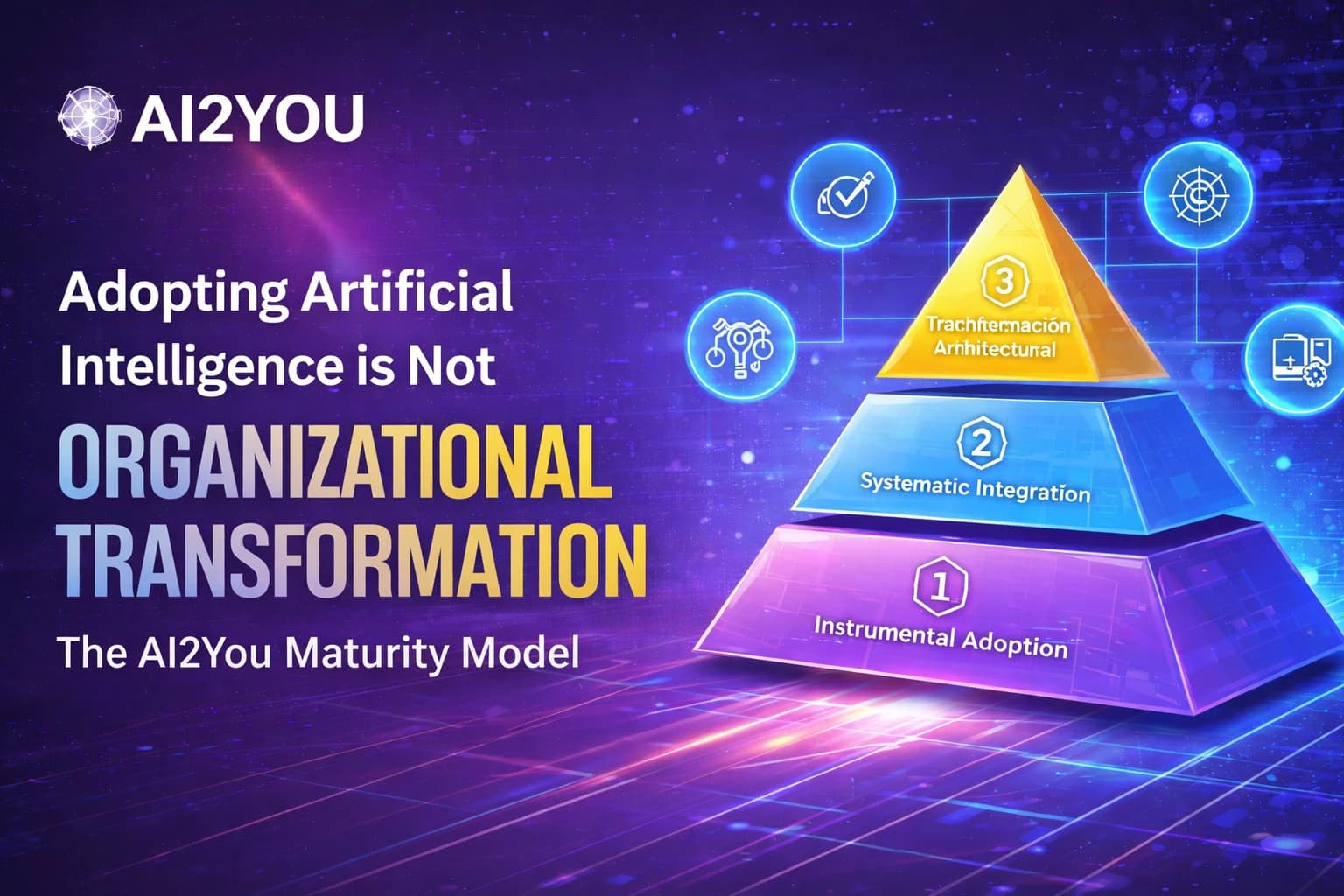
As the AI2You maturity model describes in AI Adoption is Not Organizational Transformation, there is a fundamental difference between instrumental AI adoption (using tools) and AI-driven architectural transformation (redesigning the organization around it). Process Redesign is the mandatory step between the two.
And for organizations building Multi-Agent Systems as the new hierarchy of corporate automation, the good news is that Process Redesign effort done once for one domain accelerates exponentially across the next — because the methodology becomes an organizational asset, not an isolated project.
Conclusion
The question that defines the success or failure of an AI agent project is not "which model to use?" or "which orchestration framework to choose?" It's a simpler and harder question at the same time:
Was this process designed for a human or for an agent?
If the answer is "for a human" — and in most cases it will be — you have work to do before writing a single line of code. That work isn't glamorous. It won't make the pitch deck. It won't generate a LinkedIn post about "autonomous agents in production." But it's the only work that guarantees you'll reach production — and stay there.
LogiPrime Brasil learned this the hard way. You don't have to.
The APRF isn't a complex methodology that requires months of consulting. It's a set of disciplined questions asked in the right order, before any technology decision. Process Archaeology reveals what's actually happening. Decision Atomization creates units of work that agents can execute with confidence. State Architecture ensures that failures don't mean restarts. HITL Threshold Engineering places humans where they belong — in judgment, not mechanical execution. Instrumentation-First ensures you'll know when something is wrong before the customer finds out.
These five steps don't replace the technical knowledge about Workflow Engineering or agentic architecture in production. They are what comes before — and what makes everything else possible.
The next article in this series will address a problem that emerges once you successfully reach production: how to prove, audit, and govern what your agents are doing. Because getting there is only half the problem.
References and Further Reading
-
McKinsey & Company — The State of AI in 2025: Agents, Innovation, and Transformation. Survey of 1,993 participants across 105 countries, November 2025. https://www.mckinsey.com/capabilities/quantumblack/our-insights/the-state-of-ai
-
Deloitte Insights — Agentic AI Strategy: Tech Trends 2026. Analysis of agentic implementations and scaling obstacles, December 2025. https://www.deloitte.com/us/en/insights/topics/technology-management/tech-trends/2026/agentic-ai-strategy.html
-
Gartner — Gartner Predicts Over 40 Percent of Agentic AI Projects Will Be Canceled by End of 2027. Press release, June 2025. https://www.gartner.com/en/newsroom/press-releases/2025-06-25-gartner-predicts-over-40-percent-of-agentic-ai-projects-will-be-canceled-by-end-of-2027
-
Machine Learning Mastery — 7 Agentic AI Trends to Watch in 2026. January 2026. https://machinelearningmastery.com/7-agentic-ai-trends-to-watch-in-2026/
-
Arion Research — The State of Agentic AI in 2025: A Year-End Reality Check. December 2025. https://www.arionresearch.com/blog/the-state-of-agentic-ai-in-2025-a-year-end-reality-check
-
Anthropic — Building Effective Agents. Technical documentation on design patterns for reliable agentic systems. https://www.anthropic.com/engineering/building-effective-agents
-
CIO.com — How Agentic AI Will Reshape Engineering Workflows in 2026. February 2026. https://www.cio.com/article/4134741/how-agentic-ai-will-reshape-engineering-workflows-in-2026.html
-
Temporal.io — Durable Execution for Agentic Workflows. Technical documentation. https://temporal.io/how-it-works
-
LangChain — LangSmith: Observability for LLM Applications. Documentation and use cases. https://docs.langchain.com/langsmith/home
-
AI2You Blog — Related articles in this series:
- Agent Runtime Architecture: Scaling Reliable Multi-Agent Systems in Production
- Agentic Workflows: The Transition from Reactive AI to Autonomous Execution
- Multi-Agent Systems (MAS): The New Hierarchy of Corporate Automation
- What Is Workflow Engineering?
- AI Adoption is Not Organizational Transformation